Showing posts with label research. Show all posts

Wednesday, April 17, 2013

A Water Story using Waterlife and Storybird!

Recently, several classes of grade 8 students visited the library in order to research water. They were interested in topics like water pollution, water use, the water cycle and the belugas whales in the St. Lawrence River.
Mrs. G. Singh and myself first discussed the project approximately two months before students were to arrive in the library for research sessions. Last year we utilized a Web 2.0 tool called Storybird.  It's an easy and versatile site that can be used for all sorts of activities from creative writing to writing non-fiction picture books.
Mrs. Singh and I came up with a set of criteria for the kids and tried to build on the project from the previous year. This year we added some time to research water issues using the National Film Board site called "WaterLife" Students were given a graphic organizer called "A Gem of an Idea". I've Included an image of the organizer here along with the instructions for using it.

The students spent two classes searching through the website writing down interesting facts and sharing this information with their peers by creating graphic organizers about water. Here are some examples. 


Students were then instructed to come up with some ideas for writing a story that would explain what they had learned about their chosen water topic. We discussed main ideas and themes and then students wrote a short organizer and began creating their stories on Storybird. The paid version of Storybird allows you to print out the stories as PDFs. We utilized the free version of Storybird.


Here are some screen shots from their Stories. This first story is an example of some of the topics and images available on Storybird. The idea behind Storybird is to take inspiration from the pictures available. Part of our struggle is to show the kids that their story needs to evolve from the images. Some students do struggle with this. We are lenient in that in the case of the story below this is a killer whale image not a Beluga.
This story discussed Beluga whales. 

Here's a second example. Again I'm showing just the cover page and one page from inside the story. 


The students seemed to enjoy this project and gave us lots of good feedback. The advantage to this project was our ability to combine language skills with research for science. In the end it was an effective way to integrate subject matter. 


Tuesday, April 2, 2013

Grade 8 Cell Projects

Three classes of grade 8's recently visited the library in order to complete a research project for science class. They were learning about various types of cells. Students were expected to work with a partner to research a particular type of cell and then create a presentation which would explain their learning to other students in their class.

Mr. Warr and I worked to coordinate class time for students to complete the projects. I then helped Mr. Warr to introduce the project. We discussed with the students the importance of taking good jot notes so that the information would be easy to utilize when creating their presentations. Students were given several options for creating their presentations. Some utilized PowerPoint or the free version of PowerPoint called Open Office. Most decided to utilize PowerPoint. Students were required to completed a project in which they researched the life cycle, and the anatomy of a particular cell.


They utilized our digital library, print resources from our non-fiction collection and also other websites from the internet. For this project Mr. Warr and myself decided to use the mobile WiFi cart. We learned a great deal during the implementation of this project about the use of our mobile cart. Here at Lagerquist our mobile WiFi cart contains 12 iPads and 12 Netbooks. Students can access and use the cart in their classrooms. At first the use of the cart for research was difficult to master. Mr. Warr is admittedly not tech savvy and required a considerable amount of assistance with in utilizing the cart for the completion of their projects. The iPads were more awkward to use because the could not utilize PowerPoint on the iPads so we had to coordinate who was using which device. Also, the Prezi app on the iPad did not have many of the capabilities of the desktop version of Prezi so this made it difficult for students to utilize. However the students and myself worked around these limitations and overall the projects were very successful. We have learned that there are limitations to the usefulness of the iPads. The Netbooks are certainly useful for certain types of assignments and the iPads have their place in the creative realm for producing things like music, videos, photography and certainly surfing the web. The most effective projects were completed using Prezi. I've included a link to this Web 2.0 tool here. I've also added this little YouTube video that explains how Prezi works. It's a fantastic tool.


Wednesday, February 6, 2013

Photo Essays on Migration

Recently, students in Mrs. Naidu's grade 8 geography class completed a research assignment on the push and pull factors that affect human migration. Students utilized smart ideas to organize and map out information which compared the quality of life in Canada to life another country. Students utilized The CIA World Factbook, and many other sites to find information about birth rates, literacy rates, unemployment rates, etc. Students then took this information and synthesized it into a photo essay with captions for their chosen images. Students had many different options available for creating the photo essays. Some used the iPad or their Mac book, others used Prezi or PowerPoint. We gave them many options for creating their photo essays.
Students were given several periods to research their topics and Mrs. Naidu and myself guided the students through the numerous facts and information as they built their webs on Smart ideas. All in all the results were pretty successful. Students learned a great deal and had to do a lot of thinking about their topics. Some found that their countries weren't very different Canada in terms of health care, education, etc. These students really had to think about what might draw a person here to Canada if their home country was so similar to our own. We watched the students think they're way through the project and learn a great deal about life in other countries. Many of the students were surprised by infant death rate in many countries. It's fairly unheard of here in Canada to lose a child so this statistic surprised them quite a bit.
The project was an enjoyable experience for both teachers and students and the results were valuable. We look forward to working together on the same project next year. Of course there will be items that will be tweaked and the amount of data will probably be lessened. Student feedback on the project mentioned that this was a difficulty they had with the project.

Below are some links to examples of the project and the finished photo essays.
Jordan's Photo Essay
Nesha's Photo Essay as a website
Amy's Morocco Photo Essay

Thursday, December 20, 2012

Finished Aboriginal Projects

I would like to display some of our finished projects from the grade 6 aboriginal peoples unit. Please see the blog entry entitled The Actual Assignment Pages to refresh your memory as to what the assignment entailed. Students were very enthusiastic about the assignment. They worked hard to complete the assignment and worked well together. Mrs. Camarda and myself worked hard to have to students conference with each other in order to ensure that each part of the assignment was completed. I have included samples of the students work below.

  1. The Cree - this is a power point presentation which has been uploaded to a Google drive file. 
  2. The following images display the models of traditional aboriginal wigwams, teepees, longhouses, etc.
Wigwam

A Salish house

A Longhouse

A teepee

Salish Longhouse

A Wigwam

The whole collection


The following images show some of the display boards that students created for their presentations.
A Story board for an Iroquois Creation Story


A presentation board on the Blackfoot

All about the Iroquois

A drawing of a teepee that explains different parts of the structure

All about the Salish
Mrs. Camarda and I consider the project to have been quite successful. The students have learned a great deal. They were able to be creative and  appeared to enjoy the work. They were enthusiastic and confident when they presented to their classmates. This is the first time that we have run this particular project with the students and Mrs. Camarda and I will discuss some things that we plan on changing in the future. This however is what teaching is all about. We learn just as much as the kids do each time we prepare and present a unit. Sometimes the manner in which a project is introduced is changed or the order in which the background information is changed. Each time a unit is taught there are always little changes or tweaks for the better. Teachers analyze and assess the effectiveness of a given unit and then work towards building it into something better each time it is taught. 

Monday, December 3, 2012

Researching How Everyday Objects are Made

The grade 7 classes have just begun a new research project here in the library. Students are utilizing their knowledge of mixtures to help them research and understand how everyday items like toothpaste, soft drinks and steel are made. Students are required to research these items using both digital and print resources for information.

The students were taught about mixtures during class time. They were required to read about mixtures from the textbooks, teacher notes and videos. Students then completed questions on mixtures and ensured they understood the content through class discussions. The students then chose a topic and read through the assignment page.The science teachers and I then booked the classes into the library for an introduction to research and then time for researching. Students were given three periods to complete research and to start building the digital presentation of their work.

The important part of this project was to create a framework from which students could organize their thoughts and ideas about the project. When the students came to the library to begin their research we discussed the importance of being focused on what they needed to find. I first talked with the kids about the important piece of understanding we wanted them to gain from this project. The kids were quite perceptive and they were able to conclude that we wanted them to understand how classroom notes and information could be used in the real world. We wanted students to see a practical application for the use of mixtures.

We then set up a framework for understanding the content and got the kids thinking about what they needed to learn. We had students create a KWL chart which stands for "I know", "I want to know" and "I Learned". We established prior knowledge with the kids. We had them assess their understanding of the item they were researching to find out if they knew a lot about the subject or very little. This is the "I know" part of the learning. We then had them think about their items and come up with things they wanted to know about their topic. In other words where were their gaps in knowledge and which parts of the research did they really need to focus on?

Our next step was have students peruse and scan the print resources available in the library. They discovered that there was an awful lot of information in the books and a lot of it was easier to find that information from the internet. Kids started putting information down in the "I Learned" section of their chart. As they did this they discovered that they had more questions they needed to ask. The students showed that they were thinking about what they were reading by adding in new questions and crossing out ones for which they had found the information.  

We also directed students to our Library eResources. The Peel Board has paid for and provides students with access to a wide range of digital resources including encyclopaedias, dictionaries and catalogues. The students were introduced to Britannica Online and began their online research from this site. 

During the second period of their research students we began with a quick discussion about goals and plans for that particular period. We asked students to look at the assignment page assess what was most important to complete that period and to have a quick discussion with us about their plans. Hopefully, this continued to provide students with a framework from which to work and got them thinking about staying focused on the topic at hand. Students were enthusiastic about the project and I had several of them in today working during the lunch on the completion of their research. They are just beginning to build their digital presentations.

Students were told they could use either Prezi, Frames 4 or Powerepoint to help build their presentations. We asked them to utilize the program they were most comfortable using. I plan on posting some of their work once it is completed. 

Monday, November 19, 2012

An Update on the Aboriginal Peoples project


Students are working well on the project and seem to be enjoying the activity. They are productive and are starting to produce some amazing work. I've included some images here of their work in progress.


So far students have utilized the web and a variety of books to search for information, make notes and begin work on their final product. We have taught students to look for info in the books by utilizing the table of contents and the index. They have been quite successful at finding infomation in the text sources we've given them.

The hardest part of the whole project for students seems to have been skimming through internet information to find what they need. Students look for websites that will discuss exactly the information they need. They struggle with the idea that a website might be a site that contains information about Iroquois but that it will be broken down into subsections.

One young lady was rather frustrated that there were no sites that specifically discussed the types of tools used to build longhouses. It took a while to explain to her that she needed to scroll through the site on the Iroquois and find a section about the longhouse and that if she read that section she would find out how they built longhouses. Students seem to have a need for the information to pop up instantly. The hardest part of all of this is teaching them to research not expect the answers to be there at their beck and call.
         
How do you battle that? How do you get a student to start researching properly?

The answer is simple. You really have to reinforce the concept of skim and scan. You also have to be extremely patient. I have found that time and time again I will say to the same students.
"Slow down read the site carefully. The information is there hiding and you have to search for it. Research is like a scavenger hunt. The answers aren't obvious. If they were there would be no challenge to the whole task." 
Learning to research is like learning to walk. First you crawl, then you stumble and fall, but if you keep trying you start to walk and then  run. Research is the same way. It takes for ever to find the info you're looking for. Then you have to read through a site and discover it might not be what you were looking for but then when you find what you need the whole project moves at great speed. The kids will get it we just have to be patient and guide them.

Wednesday, November 14, 2012

What Does a Teacher/Librarian Actually Do?

What Does a Teacher/Librarian actually Do?

Good question! 
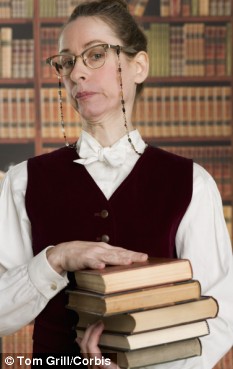
A lot of people ask me that and some people make assumptions about the job. Others just have no clue and well lots of people don't like libraries so they don't care. They see the stereotypical library where the librarian is crabby, grumpy and insists on complete silence.

Kind of like the image you see here.

This is the way lots of people picture us. Talk about  stereotypes.


Television shows and movies enforce this stereotype. If you have the time there's a whole you tube series on librarian stereotypes. You can find the link to the first movie in the series right here.

So lets dispel some myths. Lets talk about what I really do. In another entry I'll discuss the grand vision for this library. So let's stay focused on the job itself, at least for today. Please keep in mind that there is a significant difference between Teacher/Librarians and Public Librarians. Teacher/Librarians are teachers who operate libraries located in schools and have a teaching degree with a Library qualification. Public Librarians have library sciences training from a college or university. My list discusses the role of the Teacher/Librarian. Depending on the person and the school this list may vary. The list is a description of what I do on a daily basis others may have different items on their list but it would be similar to my own. 
  1. Keep staff up to date with available programs for student learning.
  2. Run library orientations, at the start of the year in order to familiarize students with the resources available. 
  3. Collaborate with teachers and help them to build research unit for students.
  4. Manage the library collection. This includes purchasing, weeding out damaged or out of date books.
  5. Create and implement programs which promote literacy like the Forest of Reading program.  
  6. Provide assistance to teachers when planning units.
  7. Provide staff with resources for the classroom.
  8. Provide a schedule of available times for book exchange, teaching periods, etc.
  9. Work with teachers to coordinate optimal use of library time.
  10. Run a library leaders program that involves students in the maintenance of the library collection.
  11. Instruct students on techniques for successful research projects.
  12. Consulting with teachers in order to provide teachers with materials for their classrooms. (For example, I recently put together a collection of Gothic novels and Frankenstein resources. A teacher is planning on using these resources for her novel study unit.)
  13. Keep the printers supplied with paper.
  14. Manage overdue lists. This includes following up with students at the end of the year and getting them to pay, for or replace lost and damaged items.
  15. Maintain the library lab which is usually a bank of 25 to 30 computers. This includes calling techs. for repairs and managing the network. (note: not all librarians have this added position. Some libraries don't have labs)
  16. Catalogue and shelve library materials. 
  17. Provide work spaces for students to complete work.
  18. Assist students with finding resources within the library and on the web.
  19. The list is endless I'm pretty sure I could list 50 more things but I'll stop here before this entry gets too long. 

I would like to end this entry with a different image of a librarian. 

For orientation this year, I created an avatar of myself and posted it for kids to view. I used a website called The Hero Factory. The kids thought it was pretty funny and wanted to know how to use the site. Some have since made characters and are using these characters for creative writing projects. 

Gone (I hope) are the days of the stiff, unforgiving, cranky, nerdy librarian. I want everyone to view the library space as a hub of activity in which the space reflects the needs of the student body. The library should encourage students to read for pleasure and for learning. 

I want students here researching, practicing drama skits, utlizing technology to build a presentation for class, and 100 other things. 

This library and many others like it should be a place where kids love to learn. 


Tuesday, November 13, 2012

The Actual Assignment pages.

Yesterday I posted a description of a collaborative project that I completed with some grade 6  students and their teacher Mrs. Camarda.

Today I've pasted in the assignment pages for our First Nations Assignment so that you can see the roles that we supplied to the kids. Hopefully, this gives you an idea of the structure we have created for this assignment. Please see the Two Heads are Better than One post for more info on the assignment.


Aboriginal Unit:  Culminating Task

You will be placed into groups.  Each group will have the task of researching one of the following Aboriginal Groups:     

Cree (Subarctic Region)
·         Haida (Northwest Coast Region)
·         Interior Salish (Plateau Region)
·         Inuit (Arctic Region)
·         Iroqouis (Eastern Woodlands)
·         Blackfoot  (Plains)

As a group you will need to complete the following tasks that will be presented at our Potlatch at the end of this unit.

Task 1
Find a myth/story from the group that you are studying.  Create a four square sketch of the stories important scenes. 
Write a paragraph on why this story would be important to your tribes culture and what message or lesson your group thinks it is trying to teach.

Task 2
Research the art and culture of your tribe.  Look at the fact sheet provided and decide on an individual and art form that you would like to research and describe in your report.

Task 3
Describe the lifestyle that was lived by these tribes before contact with the Europeans.  Look at the fact sheet provided for key words that you could use to begin your research.  Look at what their homes looked like, what tools they used to gather food and survive the harsh climate, how they travelled or transported goods.

Task 4
As a group, once you have researched your tribe, you will come together and design a flag that represents the people of your tribe.  Also, you will need to share a dish during the potlatch that you think best represents these people that you can share with the rest of the class.

That was page 1. Here's page 2.


The Story Teller  Checklist


1.       Your task is to find 2 myths from the particular tribe you are researching. 
2.      Create a four square sketch for each story. 
These should be drawn neatly and coloured in.        

3.       Write one paragraph on the importance of one of these stories. 
What is the main idea of the story?
What is the theme? 
In your opinion, how do you think this story was used by the tribe in
order to help them survive?                                      

Cultural Attaché


1.       Research an art or musical style from the particular tribe you are researching.

2.       Find 2 examples of your art or musical form.  This can be a photo, a music video
or an audio file.

3.       Create a paragraph about the artist who created these pieces of art work.
Who is the artist?
When did they begin drawing/singing/sculpting, etc?
Where did they learn this art form?
What type of message are they trying to send with their art?
What is your opinion of this art form.  Do you like it?  Why/Why not? 


Life and Style Reporter A

1.       Research what it was like to live like the tribe you are researching.
Start with researching the types of homes they lived in.  Ask for a
“Constructing a Model of an Early First Nation Home”  Sheet  from Mrs. Camarda.


2.      Create a good copy drawing or a 3-D model.

3.       Write a paragraph describing the home.
What tools and materials were used for construction?
What items could be found inside the home?
Who was in charge of the home and what were their jobs? (ex. Mom’s were in
Charge of cooking meals, dad’s hunting and gathering food.)


Life and Style Reporter B


1.       Research the clothing that the tribe you are looking at wore. 

2.       In a paragraph, describe what they wore on an everyday basis and if
there were any pieces of clothing used for special occasions or ceremonies.

3.       Provide at least two examples of everyday wear and two examples of
ceremonial dress.

The Food Critic

1.       It is your task to find any interesting facts about how the tribe you are
researching found their food source. 

2.       Write a paragraph about how they were able to feed their tribe.  Think about the following questions.
How did they find food?  Were they farmers, fishers, hunters, etc?
How did they prepare their food to eat?
What tools did they use to prepare their food or kill it?
3.       Provide at least three pictures of how they found and prepared their food.

Hope this gives a good idea about what the project was all about. 


Monday, November 12, 2012

Two Heads are Better than One: The Advantage of Collaboration!


Today I would like to discuss the beginnings of a great collaborative relationship with one of my colleagues, Mrs. Clara Camarda.

We have worked together to create and structure a research project for her grade 6 classes. Collaboration is important and so is structuring the research for students.  It's not good enough to say to students, "Here's your topic! Here's your due date! On your marks get set go." In almost every case releasing the hounds, so to speak will not result in effective research.

Lets begin with collaboration.... The old saying two heads are better than one is absolutely correct.


Research projects can be complicated, time consuming and overwhelming for both a teacher and the students, having a second set of hands to assist with the whole event is very important.

Today at school Mrs. Camarda and I engaged in collaborative teaching with her grade 6 classes. The students are beginning a research project on Canada's aboriginal people's. Students are being asked to learn about their history, culture and the lives of modern First Nations people, here in Canada. Students will present their learning at a potlatch type event later on this month in class. The kids are looking forward to the event.

Over the past few weeks Mrs. Camarada and I have discussed the project thoroughly, planned out a schedule for research in the library and created a structure and set of guidelines for the students. We then discussed what I would cover with the students and how I would guide them at the beginning of the research. Mrs. Camarda created the task checklists and daily work summaries for each group to fill out, along with a list of resources to use. Mrs. Camarda searched and found some resources. I also assisted by finding some of the resources and websites we would supply the students in order to help give them direction. I also pulled a large number of print resources from our shelves that have been reserved solely for here classes use in the library.

On the day when we introduced the project to the students Mrs. Camarda and I took turns explaining different elements of the project and we also worked together to meet with each group and help them to consolidate each person's role within their groups. Kids seemed to be focused and confident.

Students decided on their roles and negotiated with group members to resolve conflicts over who was going to complete which tasks. Rock, paper, scissors was used occasionally to rectify disagreements. :)))

At that point we began our preview of available resources. Students perused the print resources and made quick notes of page numbers and book titles and myself and Mrs. Camarda circulated throughout the room assisting students in using the index and table of contents to help them find  information on their topics.

Then students were introduced to the online resources in the same way and we discussed using Boolean terms to help narrow down their searches. They were given about 20 minutes at the end of the period to begin their research. Here's a link to the digital library we introduced to students today. It's one designed solely for Peel students. Library eResources


During all this activity Mrs. Camarda and I worked to help students we would make comments about each other's suggestions and the discussion with the kids was very much a give and take between the two of us neither of us led the lesson while the other was silent. We had a conversation with the kids. When one of us forgot to mention something the other would jump in.  It worked very well.

I hope that we have provided the students with an example of good collaboration that they will use with their groups and that we have enriched their learning by having two of us available to assist them with their learning.

So I will end here by saying I will definitely post samples of student work when they finish up their projects and I look forward to working with Mrs. Camarda again this year. It was a blast and we're not even finished the project yet.

I've included the assignment pages here.

As a side note here's a link to another project I'm currently collaborating on with 4 other teachers.
The motivation tap